
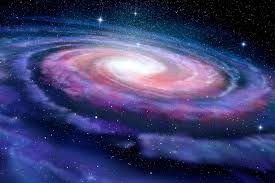
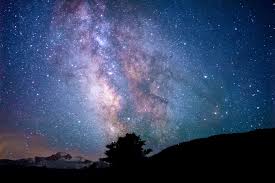
Galaxies are vast, mysterious, and incredibly beautiful. Each one holds secrets that scientists are still trying to understand. Now, let’s go deeper and explore each of these fascinating facts in a way that will truly expand your perspective of the universe.
1. There Are More Galaxies Than You Can Imagine
For decades, astronomers estimated that the observable universe contained around 100 billion galaxies. However, with more advanced telescopes and deep-space observations, that number has skyrocketed to over 2 trillion galaxies.
What makes this even more astonishing is that the observable universe is just a portion of the entire cosmos. This means the real number could be far greater. Every tiny dot you see in deep-space images could represent an entire galaxy filled with stars, planets, and possibly life.
2. Our Home Galaxy Is on the Move
The Milky Way isn’t just floating peacefully—it’s racing through space at incredible speed. At the same time, it’s gravitationally interacting with nearby galaxies.
One of the most dramatic events in its future is a collision with the Andromeda Galaxy, expected to happen in about 4 to 5 billion years. This cosmic encounter will completely reshape both galaxies, forming a new, larger galaxy over time.
3. Galaxies Can Collide Without Crashing Stars
When we imagine a galaxy collision, it’s easy to picture chaos and destruction. But in reality, galaxies are mostly empty space. The distance between stars is so vast that even during a collision, stars rarely hit each other.
Instead, gravity slowly distorts their shapes, creating stunning cosmic structures like tidal tails, rings, and new star-forming regions. These events can last millions of years and are among the most beautiful phenomena in the universe.
4. Black Holes Live at the Center of Most Galaxies
At the center of most large galaxies lies a supermassive black hole. In our galaxy, this is Sagittarius A*.
These black holes are incredibly dense and have gravitational pulls so strong that not even light can escape. Despite their destructive reputation, they also play a crucial role in regulating galaxy growth and star formation.
5. Some Galaxies Are “Dead”
Not all galaxies are active and vibrant. Some have used up or lost the gas needed to form new stars. These are often called “dead galaxies.”
They tend to appear reddish because they are filled with older, cooler stars. Studying these galaxies helps scientists understand how galaxies evolve and what causes them to stop forming stars.
6. Galaxies Come in Many Shapes
Galaxies are not all the same. Their shapes reveal clues about their history:
- Spiral galaxies (like the Milky Way) have beautiful arms and ongoing star formation
- Elliptical galaxies are rounder and contain older stars
- Irregular galaxies lack a defined shape, often due to past interactions or collisions
Each type tells a different story about cosmic evolution.
7. The Largest Galaxies Are Truly Gigantic
Some galaxies are so massive that they are difficult to comprehend. One example is IC 1101, which spans about 5.5 million light-years.
To put that into perspective, if the Milky Way were the size of a coin, IC 1101 would be the size of a large city. These giants usually sit at the center of galaxy clusters and have grown by merging with other galaxies over billions of years.
8. Galaxies Are Held Together by Dark Matter
Most of a galaxy’s mass isn’t visible. Scientists believe that galaxies are surrounded by massive halos of dark matter, an invisible substance that does not emit light.
Without dark matter, galaxies would spin so fast that they would fly apart. Although we can’t see it directly, its gravitational effects are essential for keeping galaxies stable.
9. We Can See Galaxies from the Past
When you look at distant galaxies, you are actually looking back in time. Light travels at a finite speed, so the light reaching us today may have left those galaxies millions or even billions of years ago.
This means telescopes act like time machines, allowing scientists to study how galaxies looked in the early universe.
10. There May Be Rogue Galaxies
While many galaxies exist in clusters or groups, some drift alone through space. These are known as rogue galaxies.
They may have been ejected from clusters due to gravitational interactions or formed in isolation. Their lonely journey through the universe makes them particularly intriguing to astronomers.
Final Thoughts
The universe is far more vast, complex, and mysterious than we often realize. Each galaxy is like a cosmic city, filled with wonders beyond imagination.
And after exploring all of this, you might find yourself wanting to bring a piece of that beauty closer to you. Imagine having your own miniature galaxy glowing softly in your room—a 3D galaxy lamp that captures the magic of the cosmos.
You Can Purchase Clicking On the Image
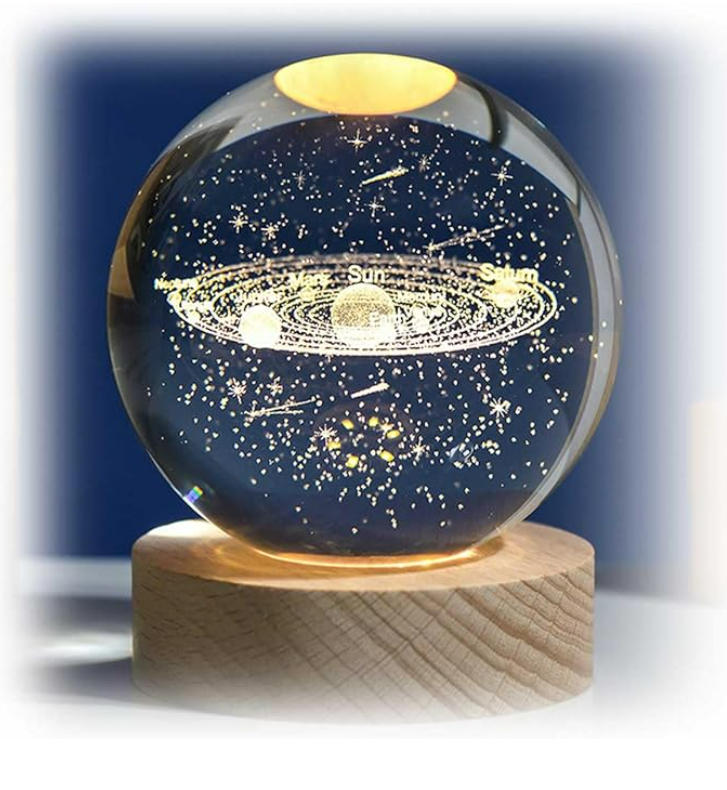
After seeing how incredible galaxies truly are… wouldn’t it be amazing to have one right beside you? 🌌